Concrete vs. Pavers: The Kansas City Homeowner's Guide
When it comes to upgrading your driveway or patio in Kansas City, you'll likely face one of the biggest decisions in outdoor construction: concrete or pavers. Both options have earned their place in modern landscaping and hardscaping, but they offer distinctly different benefits, drawbacks, and long-term value propositions. Understanding the differences between these two materials is essential for making an informed choice that aligns with your budget, aesthetic preferences, and maintenance tolerance.
The choice between concrete and pavers isn't simply about picking the cheaper or prettier option. It's about understanding how each material performs in Kansas City's climate, how much work you're willing to invest in upkeep, and what kind of visual impact you want your property to have. This guide will walk you through the key considerations so you can make the best decision for your home.
Durability and Weather Resistance in Kansas City's Climate
Concrete Driveways are known for their exceptional durability and strength. A properly installed concrete surface can last 25 to 40 years or more, especially when sealed and maintained regularly. Concrete is monolithic, meaning it's poured as one continuous slab, which gives it superior structural integrity and resistance to shifting soil. In Kansas City's climate, where freeze-thaw cycles occur during winter months, concrete's solid construction helps it withstand the stress that causes many materials to crack or heave.
Pavers, on the other hand, are individual units that are laid in a pattern with sand or polymeric sand between them. While quality pavers can also last 25 years or longer, they're more susceptible to individual damage. A single paver can crack, break, or shift without affecting the entire surface, which some homeowners see as an advantage. However, the joints between pavers can allow water infiltration, and in Kansas City's winter weather, that water can freeze and thaw, potentially causing pavers to shift or settle unevenly over time. Replacing damaged pavers is possible but requires more labor than patching concrete.
Maintenance Requirements and Long-Term Care
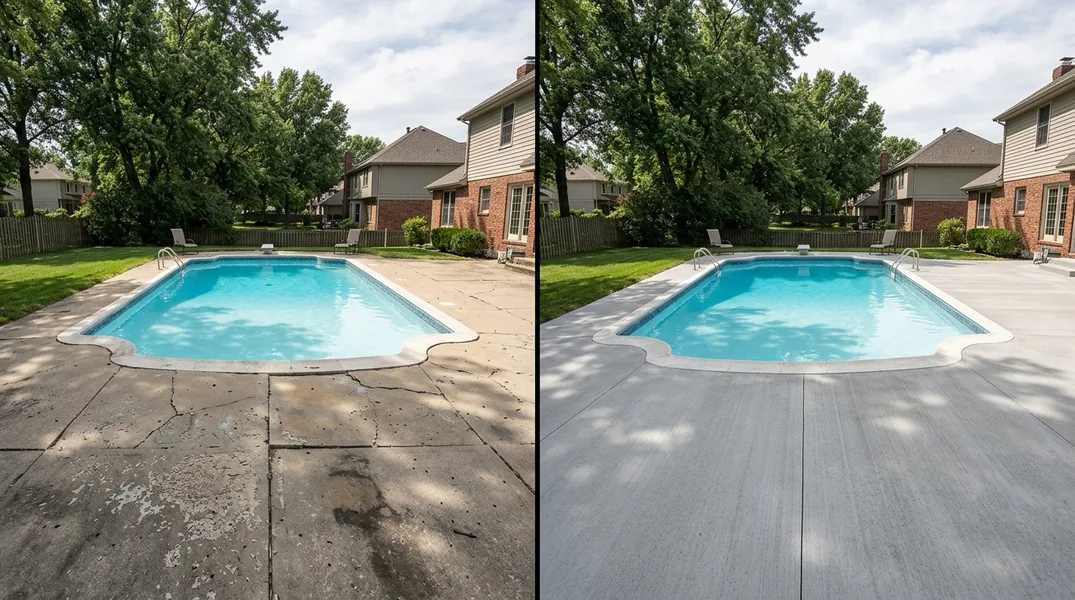
Concrete requires regular maintenance to stay in top condition. Sealing your concrete every two to three years protects it from moisture, UV damage, and staining. You'll also need to keep it clean with occasional pressure washing and address any cracks or chips promptly to prevent water from seeping underneath and causing further damage. Concrete Repair & Resurfacing services can restore aging concrete, but these repairs represent an ongoing investment in your property's upkeep.
Paver maintenance is more hands-on and labor-intensive. The sand between pavers needs to be replenished periodically as it washes away or compacts. Weeds can grow through the joints, requiring regular weeding or application of herbicides. You'll also need to monitor individual pavers for shifting, settling, or damage and replace them as needed. Some homeowners prefer this flexibility because they can update their patio's appearance by replacing a few pavers with a different color or style. However, if you're looking for a low-maintenance option, concrete is generally the easier choice.
Cost Comparison: Concrete vs. Pavers for Kansas City Properties
When evaluating pricing for your driveway or patio project, initial installation cost is often the first consideration. Concrete typically costs less upfront than pavers, ranging from $6 to $12 per square foot for basic concrete installation, depending on site conditions and finishing options. Pavers generally run $15 to $25 per square foot or more, making them a significantly higher initial investment. For a 500-square-foot driveway, you could be looking at $3,000 to $6,000 for concrete versus $7,500 to $12,500 for pavers.
However, the total cost of ownership extends beyond initial installation. Concrete requires sealing and periodic maintenance, which adds up over 25 to 40 years. Pavers demand more frequent attention, including joint sand replacement, weed control, and individual paver replacement. When you factor in these ongoing expenses, the gap between concrete and pavers narrows somewhat, though concrete still typically comes out ahead financially. If you're planning to stay in your home long-term and want to minimize ongoing costs, concrete offers better value. If you prioritize design flexibility and don't mind spending time on maintenance, pavers may justify their higher price tag.
Aesthetic Appeal and Design Flexibility
One of the strongest arguments in favor of pavers is their superior aesthetic versatility. Pavers come in countless colors, shapes, sizes, and patterns. You can create intricate designs, herringbone patterns, circular layouts, and color combinations that pavers make simple to achieve. If you're envisioning a high-end, designer appearance for your outdoor space, pavers offer unmatched flexibility. They also photograph beautifully and can significantly enhance your home's curb appeal and perceived value.
Concrete shouldn't be dismissed aesthetically, however. Stamped & Decorative Concrete options allow you to create the look of pavers, stone, brick, or tile at a fraction of the cost. You can choose from dozens of stamp patterns, add color through integral dyes or stains, and even create borders and custom designs. For homeowners who want an attractive, personalized outdoor space without the premium paver price tag, decorative concrete offers an excellent middle ground. The key difference is that once concrete is installed, your design is permanent, whereas pavers can be rearranged or replaced if you want to change the look years down the road.
Which Option Is Right for Your Kansas City Home?
Choosing between concrete and pavers ultimately depends on your priorities, budget, and lifestyle. If you value durability, lower maintenance, and better long-term value, concrete is the practical choice. If you want maximum design flexibility, enjoy hands-on maintenance, and are willing to invest more upfront for a premium aesthetic, pavers are worth the investment. Many homeowners in Kansas City and surrounding areas like Blue Springs and Independence find that a hybrid approach works best, using concrete for driveways and pavers for accent areas or patios.
The best way to determine which option suits your specific project is to consult with experienced professionals who understand local conditions and can assess your property's unique needs. Kansas City Concrete has years of experience installing both Concrete Patios and helping homeowners understand their options. We're happy to discuss your project, answer your questions, and provide a free estimate so you can make a confident decision. Call us today at (913) 392-7047 to get started.
Looking for a professional tree service in Kansas City? Kansas City Concrete responds fast for all your concrete needs.
Get a Free QuoteOur services: Concrete Driveways · Concrete Patios · Stamped & Decorative Concrete