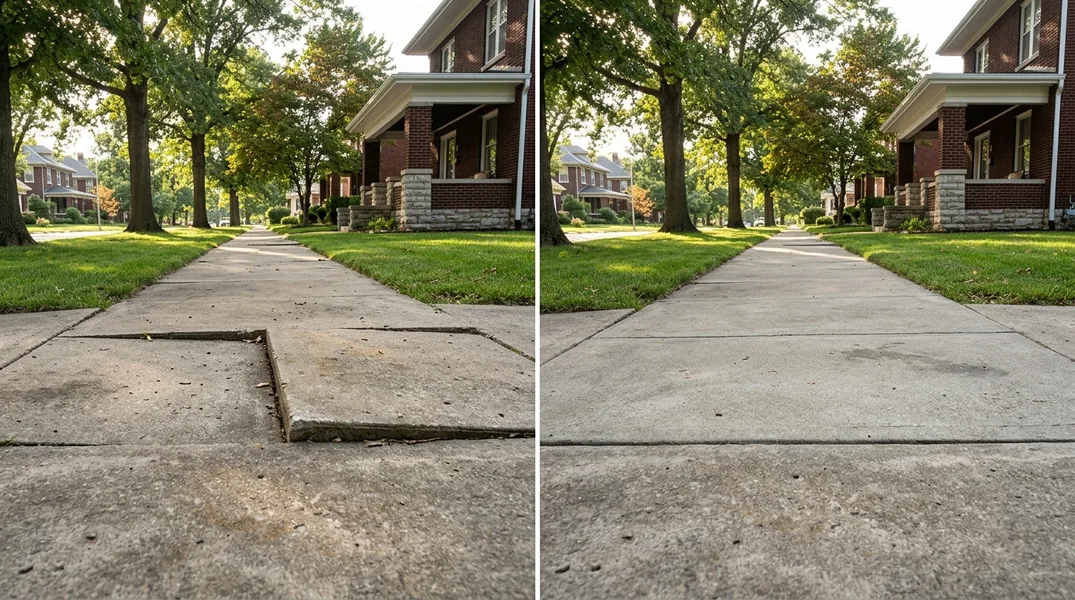
Understanding Wymore-Ladoga Clay and Its Impact on Concrete
If you own a home in Kansas City, you're living on some of the most challenging soil in the Midwest. The Wymore-Ladoga clay formation, which underlies much of the region, is a geological reality that every homeowner should understand. This clay isn't like the soft, moldable clay you might have played with as a child. Instead, it's a dense, mineral-rich soil that responds dramatically to changes in moisture content, expanding when wet and shrinking when dry.
The problem for concrete is straightforward but devastating. When clay absorbs water during Kansas City's wet springs and heavy rains, it swells upward with tremendous force. Conversely, during dry summers or cold winters, the same clay contracts, leaving voids beneath your concrete. Concrete Driveways, patios, and foundation slabs sit directly on this unstable foundation, flexing and cracking under the constant pressure. This cycle repeats year after year, turning minor cracks into major structural problems that threaten the integrity of your property.
How Freeze-Thaw Cycles Compound the Problem
Kansas City winters add another layer of complexity to the clay soil problem. When water trapped in the clay freezes, it expands further, pushing upward on anything resting on top of it. This freeze-thaw cycle, which can occur multiple times throughout a single winter, is one of the most destructive forces acting on concrete in the region. A driveway that survived one winter might show significant damage by spring, with heaving, cracking, and surface spalling becoming visible.
The damage doesn't stop at visual cracks. Once concrete begins to break apart, water penetrates deeper into the fissures, reaching the clay below and accelerating the cycle. Freeze-thaw damage is cumulative, meaning each winter adds to the previous year's deterioration. What starts as a hairline crack in November can become a structural failure by March. This is why homeowners in Independence, Blue Springs, and throughout the Kansas City metro area often find themselves needing Concrete Repair & Resurfacing far sooner than homeowners in more stable soil regions.
Signs Your Concrete Is Suffering from Clay Soil Damage
Recognizing the early warning signs of clay-related concrete damage can save you thousands of dollars in repair costs. The most obvious indicator is uneven settling, where one section of your driveway or patio appears higher than an adjacent section. This step-like appearance happens because different areas of clay expand and contract at different rates depending on moisture levels and sun exposure. You might notice that one side of your driveway is higher than the other, or that your patio has developed a noticeable slope where it was once level.
Cracking patterns also tell a story. Unlike random cracking from normal wear, clay soil damage typically produces wide, jagged cracks that follow specific patterns. You might see a network of cracks radiating from a central point, or long cracks that run parallel to the length of your driveway. Spalling, where the concrete surface flakes or chips away, is another red flag. Additionally, if you notice that cracks reappear after being filled or sealed, that's a strong indication that the underlying soil movement is the culprit, not just surface-level damage. Bowing or buckling of concrete slabs, particularly noticeable on basement walls or garage floors, indicates serious subsurface movement caused by expansive clay.
Prevention and Long-Term Protection Strategies
While you can't change the clay soil beneath your property, you can take proactive steps to minimize its destructive effects. The most important strategy involves managing moisture around your concrete. This means ensuring proper drainage away from your driveway and foundation, maintaining consistent soil moisture levels, and keeping gutters clean so water doesn't pool near your home. During wet seasons, be mindful of water accumulation, and during dry seasons, consider light watering to prevent extreme shrinkage. Many homeowners overlook this simple maintenance, but it's often the most effective defense against clay soil damage.
When installing new concrete, proper base preparation is critical. A well-compacted gravel base with adequate drainage can absorb some of the stress caused by soil movement. Additionally, using concrete with appropriate air entrainment and proper reinforcement helps it withstand the stresses of expansive soil. If you're planning a new Concrete Patios or driveway, working with an experienced local contractor who understands Wymore-Ladoga clay characteristics is essential. They'll know the right techniques and materials that have proven effective in the Kansas City climate.
When to Call a Professional for Concrete Repair Near Me
Knowing when to repair versus replace concrete is crucial in clay soil regions. Small cracks less than one-eighth inch wide can sometimes be sealed with quality concrete caulk as a temporary measure, but this is rarely a permanent solution when expansive soil is involved. Once cracks exceed one-quarter inch in width, or when you notice heaving and settling, professional assessment becomes necessary. Attempting DIY repairs on clay-damaged concrete often leads to repeated failures because the underlying soil movement continues unchecked.
Kansas City Concrete specializes in diagnosing and treating concrete damage caused by local soil conditions. Our team understands the specific challenges posed by Wymore-Ladoga clay and can recommend whether your situation calls for targeted Concrete Repair & Resurfacing, complete replacement, or a combination approach. We've worked with hundreds of homeowners facing similar issues, and we know what solutions actually hold up in Kansas City's demanding environment. If you're noticing signs of concrete damage, don't wait for the problem to worsen. Contact us at (913) 392-7047 or request a free estimate so we can assess your specific situation and recommend the best path forward.
Concrete Repair Cost in Kansas City: What to Budget
Understanding the financial impact of clay soil damage helps homeowners plan appropriately. The cost of concrete repair varies significantly depending on the extent of damage and the repair method chosen. Minor crack sealing might cost a few hundred dollars, while extensive repairs involving base stabilization or partial replacement can run several thousand dollars. In some cases, complete replacement becomes the most economical long-term solution, especially when repeated repairs have already consumed significant resources.
When evaluating pricing for concrete work in Kansas City, remember that the cheapest option isn't always the best investment. A repair that doesn't address the underlying soil movement will fail again within months or a year, essentially wasting money. Kansas City Concrete provides transparent estimates that explain what's causing your damage and why we recommend specific solutions. Our goal is to help you make informed decisions that protect your property long-term, not just offer a quick fix. For detailed information about costs specific to your project, reach out to us at (913) 392-7047 or schedule a free estimate today.
Looking for a professional tree service in Kansas City? Kansas City Concrete responds fast for all your concrete needs.
Get a Free QuoteOur services: Concrete Driveways · Concrete Patios · Stamped & Decorative Concrete